Thanks for the link!! ^^
I'm not sure why I'm bitting but here goes! 2/3 of the info goes back to the R6 which beats to a different drummer. The ECMs have a whole different outlook on life! The YEC race parts for the R6 offer ignition and fueling adjustment right through the gauge and it covers the info I hinted at above.
The FZ not being race inspired didn't get those options. That said, I have a very hard time believing C1 = Cylinders 1&4 and C2 = 2&3 on our bikes OTHER than the EARLY FSM VAGUELY introduces the concept.
But mine were both Zero so I moved them equally and the @ss dyno indicates change in a favorable manor! :thumbup: Very well thought out decision there eh?

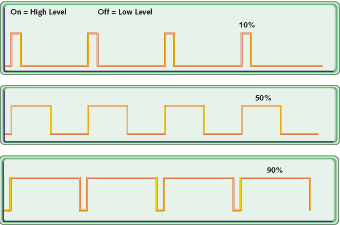
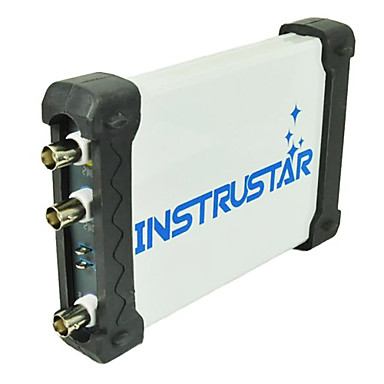
As stated; with an oscilloscope I CAN PROVE or DISPROVE its impact at idle because I can watch the injector duty cycle (pulse width = time 12v is applied to injector)and compare the pulse width of the two sets. However, without a load like a dyno, I have no means of verifying much off idle and static rev's impose no load so the data is useless.
** WHAT IS MISLEADING IS THIS ** If one set of cylinders is lean its going to drop vacuum because the engine is unsteady. What does the ECM do when the Vacuum drops? It very likely adds fuel. So, one has to keep this in mind and RPM as it will change it. Well unless I fake it out with my DeWalt giving it a fixed RPM regardless of C#!!! haha!
Plausible vs not plausible or Pros vs Cons:
- C1 and C2 as they apply to the FZ.
PRO - I suppose yamaha could fit custom headers to each bike, start them tune them and test emissions per cylinder. Set the C values per cylinder group. Seems very unlikely...
CON - the wild disparity seen between C1 and C2 settings. Meaning, how could the fueling be so different between engines fed from the same fuel rail on the same pressure. Injector open time determines AFR going in. In simple terms its the time the injectors are firing or the duty cycle.
CON - if 1&4 and 2&3 have such wild variance like -20 and +7, how is that it even runs smooth at all?
- Compression isn't that different from hole to hole
- Valve timing isn't that different from hole to hole
- Ignition timing isn't that different from hole to hole
- Air volume isn't that different from hole to hole
- So why adjust in groups if there is that much difference vs individuals? ** We know physically ** its batched and grouped so it cannot be done per cylinder. But if such huge variance exists from group to group why would it not exist from hole to hole???
PRO - it just doesn't make sense that a different header is used to tune the bike.
However, it is possible a computer tunes it. They could run each C value up and down monitor the hydrocarbons, determine some value and then do it to the other group. Take the two different values and normalize them somehow. I'm having very hard time accepting this tho.
PRO - the Fuel pressure regulator is wild card variation from bike to bike. Fuel pressure and injector open time determine how much fuel is injected over time. That stamped steel PR with a spring basic could create a fair variance from bike to bike. This could change the fuel curve needed to maintain stoichiometric fueling from bike to bike. With this line of thinking, C1 and C2 are not applied in batch but as a load increases on the tread mill and it could go down something like the R6 notes above????
- CON - Early FSM print showing C1 = 1&4 and C2 = 2&3
- Something else, S2s having O2 sensor. Is it simply offsetting what the ECM sees from the sensor?
My best guess is one is for idle and the other up to to 5K but I don't know.
I found NO ONE blew up their engine, so I tried it.
I know increasing it adds fuel as it richens the mix. Verified as the RPM goes up when I add more air!
Cliff, you have any thoughts about this? [MENTION=2579]Motogiro[/MENTION]
Chance, take a look at the YEC R6 info here, it has some interesting info in it. Including some BS that says our forks also came equipped with Ohlins cartridges. [MENTION=25723]ChanceCoats123[/MENTION] >>
Click -- get this-->
Read me
Borrowed from the webs...
Think of the top as low RPM, middle as 45% throttle, and bottom as WOT. So, in terms of idle and group1 vs group2, if C1 is compared to C2 the period of time will be different if these relate to the two groups as portrayed in the early FSM. i.e. while looking at 2 channel O'scope...
Pic Borrowed from the webs...
That is, a scope having 2 channels will be watching group1 and group2, In the ideal world the pulsewidth will be the same. If group control offers changes, the pulse width difference can be measured using a scope.



 opcorn: