• Welcome to the Yamaha FZ6 Forums. Member registration disables ads and allows you to post and share. Register Here.

Rear shock removal, mission impossible?

r3plicant

New Member
Joined
Apr 16, 2020
Messages
14
Reaction score
5
Points
3
Location
EU
Visit site
Hey, any tips on how to remove rear shock lower pin? Tried the blow torch heating trick (multiple attempts) with groove lock pliers - no luck :( Didn't even move a bit. Any advise appreciated!
 
I just went through this about two months ago. What worked for me is soaking the pin overnight with penetrating oil and then working it up and down with a pair of vice grips (locking pliers). Once I got the up and down movement going it came right out. When you get it out plan on replacing it.
 
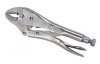
The Irwin vise grips is probably what was used BUT the style that clamps on and you don't have to keep pressure on it...

WD40 isn't the best penetrating product to use. I use PB Blaster for the really tough stuff..Capture.JPG
 
The Irwin vise grips is probably what was used BUT the style that clamps on and you don't have to keep pressure on it...

WD40 isn't the best penetrating product to use. I use PB Blaster for the really tough stuff..View attachment 73514
Thanks for your input, to be honest didn't have anything better than WD40 at the moment, apart from regular lithium/silicone based grease cans. As for the pliers, I know these keep the pressure, however I don't think they would have worked better.. Mine are also quite longer than these.
 
Lithium grease has limited penetrating properties. Penetrating oil has a carrier that allows it to follow a thread or find voids in which it deposits the lubricant.

If you've never used a good pair of vice grips (and by good I mean not made in China) then you don't understand the value. Adjusted correctly they allow the tool to hold the object to be moved, allowing all of your hand and arm strength - as well as your coordination - to be used for torque/motion.
 
Break fluid is a good penetrating oil. WD 40 is for water displacement and works well as an initial gum solvent for old grease but is not designed for any long term lubrication or penetration. A lot of good router bit bearings have been ruined by people using WD 40. As it ages it gets gummy and is a poor lubricate although it is great at what it was designed for. AT 20,000 rpm router speeds it just heats up and burns.
 
I used a bearing extractor inside the ID of the pin and a lot of twisting and pulling force. Worked quickly (few minutes) and was able to reuse the pin.

Before that I struggled with WD40, pliers and vice grips + rubber in between to protect the pin and hoping it would increase the grip.

Last resort would be a metal piece such as a cheap L-shape hex key welded in 1-2 quick spots to the end of the pin. This should allow you to really twist and pull the pin, and the heat from the welding might also dislodge the gunk/ galvanic corrosion that took place from steel being in contact with aluminum which in time makes the pin locked.

 
Finally got it out. As per Gary's advise I used proper vice grips (happened to borrow from a nearby shop), however the job was still not easy. Did a longer initial heating till the pin got properly hot, then wiggled with vice grips, this allowed to turn the pin forward and backward just a little bit, but the movement would stop just as quickly as the pin cooled down, so had to do like 10 repeated shorter heating attempts in order to keep it warm to get it out, in total it took me about 30-40 mins.

I agree about WD40, not good for lubrication or so, but still helped me with old gunk and rust removal when twisting the pin, however next time I would consider something more specific.

The pin however looks fine, no damage, apart from one side being a little bit darker than the other :D
 
Back
Top