
• Welcome to the Yamaha FZ6 Forums. Member registration disables ads and allows you to post and share. Register Here.

Garmin Nuvi 550 cable no worky

Norbert

crash tested
Joined
Oct 27, 2008
Messages
2,034
Reaction score
41
Points
0
Location
Recalculating....
Visit site
I bought a garmin mounting cradle and the power cable stopped working.
My garmin unit is fine. I looked at the fuse and it didn't blow. I'm pretty sure that the transformer broke.
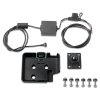
Here's the photo of the power cable here:
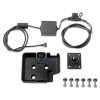
4173bMTajdL._SL500_AA300_.jpg
[ame=http://www.amazon.com/gp/product/B001CX4INE]Amazon.com: Garmin Mounting Cradle: Electronics[/ame]

It connects to my battery.

1)I checked the fuse. It didn't blow. It was not loose.
2) The cable has a mini usb plug on one end. That's how the garmin unit gets its power. Stupid engineering, I know. I cleaned the usb end with WD40 and a brush in case there was corrosion. That didn't work either.
3)The garmin unit is fine. I can plug it in using another power cable that's meant for cars.
4)The battery ring connectors work fine.
5)I took the cover off the transformer (the power cable goes from a 12v battery to 5v). It looks ok. Nothing looks burned or loose.

So...wtf is going on?
 
I bought a garmin mounting cradle and the power cable stopped working.
My garmin unit is fine. I looked at the fuse and it didn't blow. I'm pretty sure that the transformer broke.
Here's the photo of the power cable here:
4173bMTajdL._SL500_AA300_.jpg
Amazon.com: Garmin Mounting Cradle: Electronics

It connects to my battery.

1)I checked the fuse. It didn't blow. It was not loose.
2) The cable has a mini usb plug on one end. That's how the garmin unit gets its power. Stupid engineering, I know. I cleaned the usb end with WD40 and a brush in case there was corrosion. That didn't work either.
3)The garmin unit is fine. I can plug it in using another power cable that's meant for cars.
4)The battery ring connectors work fine.
5)I took the cover off the transformer (the power cable goes from a 12v battery to 5v). It looks ok. Nothing looks burned or loose.

So...wtf is going on?
If you're getting your 5 vdc output on the usb side I would suspect the usb connector. Check continuity on the output wires You may have to slit down the cable near the usb plug to ring out the wire with an ohm meter.
 
Last edited:
It is supposed to output 5v.......
If the usb connection has failed, wouldn't I see corrosion around it? Or is there a failure internally inside the usb connection?
I thought cleaning the usb connection with wd40 would have solved this. I mean I soaked it with wd40 overnight.

I will use a multimeter at some spots to check where the failure is.

Do you think the heat and/or vibration of the engine caused the transformer to fail?
That's what I thought originally, so I opened up the transformer. I expected to see something that was loose in there, but didn't.

The power cable has a one year warranty. Garmin is sending me another.
I'd like to know what caused it to fail so that I can prevent it from happening again. The cable is attached to my battery. It is not switched on/off. The cable is always receiving power. Do you think that contributed to its short life?

On other forums, like advrider, people have had problems with their Garmin power cables. One guy is on his 3rd one. Another guy had one crap out on him in Death Valley. :eek:

I'll let you know what happens. I don't want this thing to fail on me on my next adventure.
 
Last edited:
You should see 5 volts DC on the the output of the unit.
I would wire it to a switched source like your running light circuit as long as your only using that 12 volt socket for cell phone or GPS but not an air compressor etc....
 
You should see 5 volts DC on the the output of the unit.
I would wire it to a switched source like your running light circuit as long as your only using that 12 volt socket for cell phone or GPS but not an air compressor etc....

Well the source was straight to my battery, not switched. Maybe that led to its early demise...
Anyways, I hooked the cable to my battery and tested it with a multimeter. I measured ~12V DC going into the transformer and less than 1 V DC coming out.
It's supposed to be about 5V DC coming out. That's what it says on the back of the transformer.
Indeed, the transformer broke.


How do I prevent this from happening again? Insulate it from vibes and/or heat? Make it go to a switched source instead of always being on?
 
Last edited:
Well the source was straight to my battery, not switched. Maybe that led to its early demise...
Anyways, I hooked the cable to my battery and tested it with a multimeter. I measured ~12V DC going into the transformer and less than 1 V DC coming out.
It's supposed to be about 5V DC coming out. That's what it says on the back of the transformer.
Indeed, the transformer broke.


How do I prevent this from happening again? Insulate it from vibes and/or heat? Make it go to a switched source instead of always being on?

Probably not a good idea to have it looking straight at the battery during starting. It can lead to a decent spike which is usually remedied by unloading the circuit at time of cranking. Also it is active all the time pulling some current from the battery if something is plugged into the line and the motor is off.
Attached is a relay control that will allow current to pass to the accessory socket only when the running light circuit is active. This eliminates leaving the unit on. Do your running lights come on at key on or do they turn off during starter crank signal on your bike?
 
Probably not a good idea to have it looking straight at the battery during starting. It can lead to a decent spike which is usually remedied by unloading the circuit at time of cranking. Also it is active all the time pulling some current from the battery if something is plugged into the line and the motor is off.
Attached is a relay control that will allow current to pass to the accessory socket only when the running light circuit is active. This eliminates leaving the unit on. Do your running lights come on at key on or do they turn off during starter crank signal on your bike?

Some lights turn on when I turn the key, some do not. My turn signals shut off after 10 seconds, as long as my speedometer is not 0mph. You see, the bike is kinda too smart for itself. Just the other day it told me that I need my 3000 mile service done. I'm still trying to figure out what all the buttons do. There are about 11 of them. :rolleyes:

I'm not too worried about the current draw. I think the Garmin is rated at around 1.5amps. Not really a big deal. I just don't want the dang thing dying on me again!

Anyways, I'll see about getting a fuse block in my bike. That may help.
I'm sure the fuse block has switched power. There is a write up online somewhere for my bike.
I can put the Garmin in one of those outlets. Normally I have a SAE lead, heated gear outlet and Garmin all connected to my battery terminal. It's already a rats nest near my battery. I may in the future get some aux lighting and intercom, so I will be forced to get a fuse block anyways.

But right now it's hard to say why my power cable broke. People leave car chargers in their car power sockets all the time. Many of them have 12v->5v transformers.....:confused:
 
............. the bike is kinda too smart for itself. ................

I'm not too worried about the current draw. I think the Garmin is rated at around 1.5amps. Not really a big deal. I just don't want the dang thing dying on me again!

.................... it's hard to say why my power cable broke. People leave car chargers in their car power sockets all the time. Many of them have 12v->5v transformers.....:confused:

Minor point, the 12v > 5v converter isn't a transformer in the traditional electrical sense. There's a step down transformer in there, but only after the 12v is converted to AC, then run through the transformer to reduce the amplitude, then rectified back into DC and trimmed to 5v. The big ferrite bead on the side of the cord facing your Garmin tells me the design is relatively inexpensive... that's an EMI suppression band aid.

12-14v DC in > oscillator > step down transformer > rectifier > filter > regulator > 5v DC out. -- oops too noisey... add the ferrite bead to meet regs--

Someone else mentioned the big pulses and spikes that happen at startup on the battery circuit. There's a lot of SAE testing and regs concerning how well automotive electronics have to deal with that. I agree that it would be far better to isolate the Garmin power brick from that very 'noisey' 12v.

At this point you are lucky it's just spanking the supply.....
 
Minor point, the 12v > 5v converter isn't a transformer in the traditional electrical sense. There's a step down transformer in there, but only after the 12v is converted to AC, then run through the transformer to reduce the amplitude, then rectified back into DC and trimmed to 5v. The big ferrite bead on the side of the cord facing your Garmin tells me the design is relatively inexpensive... that's an EMI suppression band aid.

12-14v DC in > oscillator > step down transformer > rectifier > filter > regulator > 5v DC out. -- oops too noisey... add the ferrite bead to meet regs--

Someone else mentioned the big pulses and spikes that happen at startup on the battery circuit. There's a lot of SAE testing and regs concerning how well automotive electronics have to deal with that. I agree that it would be far better to isolate the Garmin power brick from that very 'noisey' 12v.

At this point you are lucky it's just spanking the supply.....
Thank RJ!
Totally agree this is probably the type supply used. They could just regulate the 12 vdc to 5 vdc and eliminate <oscillator, transformer, and rectifier> Then you would just have a ferrite bead brute filter etc. but this is probably a better supply. More generic and economical in that it can produce better cleaner power at different levels using the oscillator. Then there's other back end design advantage for other apps...

Heat dissipation of the this device make have been critical in it's failure. If it get's tucked near an engine component, so keep it where it can get air.

A fuse block as previously mention by OMGWTF may not be switched so everything running off of it, from the battery direct will always be active. Try to design and wire these devices so that you don't inadvertently pull your battery down when you shut down leaving devices running unless you specifically want it that way.
 
Thank RJ!
Totally agree this is probably the type supply used. They could just regulate the 12 vdc to 5 vdc and eliminate <oscillator, transformer, and rectifier> Then you would just have a ferrite bead brute filter etc. but this is probably a better supply. More generic and economical in that it can produce better cleaner power at different levels using the oscillator. Then there's other back end design advantage for other apps...

Heat dissipation of the this device make have been critical in it's failure. If it get's tucked near an engine component, so keep it where it can get air.

A fuse block as previously mention by OMGWTF may not be switched so everything running off of it, from the battery direct will always be active. Try to design and wire these devices so that you don't inadvertently pull your battery down when you shut down leaving devices running unless you specifically want it that way.

So heat may have killed it...ok...I need to place it where there is more airflow...no idea where, though.

I actually don't mind having my gps always on. I'm not worried about draining the battery. I ride my bike often and when I'm not, I put it on a battery tender. The drain is very low, so it's not a big deal.
If that's what killed my power cable, then I have to rethink that. I really don't feel like putting in a fuse block and rewiring everything, though...
 
So heat may have killed it...ok...I need to place it where there is more airflow...no idea where, though.

I actually don't mind having my gps always on. I'm not worried about draining the battery. I ride my bike often and when I'm not, I put it on a battery tender. The drain is very low, so it's not a big deal.
If that's what killed my power cable, then I have to rethink that. I really don't feel like putting in a fuse block and rewiring everything, though...

You'd be better off running the power brick off a 'switched' lead, preferably one that does not get power until the bike has started. That would hide the power supply from the starting spikes and dips that brutalize the thing.

If you have a meter, and have the cover off the DC supply, it might be interesting to see where the 5 VDC dies....
 
I asked Garmin how to prevent the power cable from breaking.
Their response:
I will gladly help with this issue. The cable from Amazon might have just being defective.

It was working for a few months. I don't think it was defective from the factory.
 
Unfortunately, I have no idea what I'm looking at here.
I don't know what component is:
12-14v DC in > oscillator > step down transformer > rectifier > filter > regulator > 5v DC out.
...Or what the sequence is.

EDIT: It's sealed in epoxy so it isn't serviceable.

35522d1304813793-garmin-nuvi-550-cable-no-worky-photonn.jpg
 
Last edited:
I asked garmin about hooking the power cable directly to the battery.
Probably my last question......was the power cable designed to be used in automotive and/or motorcycle applications?
Was it designed to be attached to a car or motorcycle battery?
Is it able to handle the power spikes and voltage dips from starting a car or motorcycle?
Their response:
Thank you for contacting Garmin International, I will be happy to help you with the unit that you have there and the power cable for the unit. The power cable was designed for use in the automobile and it is able to handle the spike of turning on and off the vehicle. It was not however designed to be plugged into a motorcyle as we have a line just for the motorcyle units called the Zumo's.

Seems kinda hokey to me.
 
I asked garmin about hooking the power cable directly to the battery.

Their response: Seems kinda hokey to me.

VERY hokey and I call BS!! I used the standard 12VDC power cable with the cigarette lighter plug on one end with my Garmin Nuvi 620W for ages without any issue and it wasn't a special "motorycle" model. They just want to upsell you to the more expensive Zumo for no reason.

This is why I hate calling any tech support....they just give you back non-helpful and useless infromation.
 
Unfortunately, I have no idea what I'm looking at here.
I don't know what component is:
12-14v DC in > oscillator > step down transformer > rectifier > filter > regulator > 5v DC out.
...Or what the sequence is.

EDIT: It's sealed in epoxy so it isn't serviceable.

35522d1304813793-garmin-nuvi-550-cable-no-worky-photonn.jpg

The thing in the middle with the three legs to the right, that's got to be the voltage regulation device..... the shiny surface opposite the 'legs' is the heat sink. The hole in it is to allow it to be screwed down to something metallic to dissipate heat. Much shorter life, without that. (not impossible, just depends on how much is being asked of the device.)

There are two coils that I can see, two resistors, and 3 capacitors. The capacitors are the ones that look like plastic wrapped soda cans. The second coil is at the 'top' of the photo, next to the red thingy. You can see a thin copper wire wrapped around it like a thread bobbin. The flakes of stuff around it aren't a good sign..... nor is the wire drooping off of it.
 
I have my Garmin SP III line tied directly (with a fuse) to the battery however it directs 12 volts to the unit, not 5.

With yours, leaving it on (wired such as mine) will just have heat build up in the unit shortening the life of it...

Yes, you can use a fuse block but its not necssary.

As stated above, I'd tie it in to the front directional running light wire. The current draw is so small a fuse block/relay isn't needed. I'd also tuck most of the workings under the fairing to keep out of the weather however air will still get to it to cool it... Perhaps plastic tie it to a piece of rubber/foam to the fairing stay to help with vibrations/flopping around..
 
I have my Garmin SP III line tied directly (with a fuse) to the battery however it directs 12 volts to the unit, not 5.

With yours, leaving it on (wired such as mine) will just have heat build up in the unit shortening the life of it...

Yes, you can use a fuse block but its not necssary.

As stated above, I'd tie it in to the front directional running light wire. The current draw is so small a fuse block/relay isn't needed. I'd also tuck most of the workings under the fairing to keep out of the weather however air will still get to it to cool it... Perhaps plastic tie it to a piece of rubber/foam to the fairing stay to help with vibrations/flopping around..

How do you tie it into the running light wire without a fuse block?
This will give it switched power w.o. a fuse block, right?
Forgive my ignorance.
 
How do you tie it into the running light wire without a fuse block?
This will give it switched power w.o. a fuse block, right?
Forgive my ignorance.


All you need is the inline fuse. If you're only running a low current device you can add your line to the running light circuit. Even better on the FZ6 would be the left low beam circuit which is capable of a few more watts and it's not switched off during high beam operation. If you plan on using higher current devices then you should run an inline fuse from the battery to a relay that is controlled by the running light circuit.

A fuse block is a device with multiple fuses and multiple connections for multiple devices that runs off a main circuit or direct to battery. :D
 
All you need is the inline fuse. If you're only running a low current device you can add your line to the running light circuit. Even better on the FZ6 would be the left low beam circuit which is capable of a few more watts and it's not switched off during high beam operation. If you plan on using higher current devices then you should run an inline fuse from the battery to a relay that is controlled by the running light circuit.

A fuse block is a device with multiple fuses and multiple connections for multiple devices that runs off a main circuit or direct to battery. :D


+1 exactly on the above and my last post.

You really only need a relay on high power drawing farkles, IE Stebal horn.

If you plan on adding lots of add on's (switched or not) a fuse block would keep things neat. They make fuse blocks that are both switched and non-switched at the same time with the relay built in, do a search(kinda spendy BTW).

For just your GPS, it would be very simple to just tie in to the front, directional running light. It'll last considerably longer not being on 24/7 (staying warm/hot) and not drawing down your battery as well...
 
Back
Top