tuning-forks
Site Supporter
I'm sure I got the link to that vid from some other thread on this forum, but can't remember which one.Very educational! Thank you!


Follow along with the video below to see how to install our site as a web app on your home screen.
Note: This feature may not be available in some browsers.
I'm sure I got the link to that vid from some other thread on this forum, but can't remember which one.Very educational! Thank you!

The original manufacturer uses a wax element controlled by water temperature. In my design, I use a water temperature-controlled switch that heats the wax when powered. The advantage of this approach is that it allows me to reduce the length of the coolant flow path and use an electric heater, which makes maintenance more convenient.I think the wax refers to how the plunger in IAC is actuated. Same as in an automotive thermostat, thermostatic wax is used to expand and contract with temperature and actuate a plunger.
Including a link to a video about IAC operation, different Yamaha model but should be similar principles.
All this aside, I don't see how you can substitute electronic control. You would have to move to a stepper motor and re-design a new ECU.
IAC operation
I believe that using a specialized tool would make disassembly easier. Since it is not frequently taken apart, attempting to do so without the proper tool may damage the screws and make reassembly difficult.Good video. It almost makes me want to remove the IAC from my spare engine and disassemble it.
The advantage is that it is easier to maintain — you only need to check whether it is powered. There’s no need to worry about whether coolant is flowing through or whether any residue remains when replacing the coolant.I saw a picture where it looked like there was a plug assembly going to the IAC and thought there was some electrical control but it was part of a harness that routed through the assembly.
As Scott pointed out,(reinventing the wheel) I wonder what other advantage the IAC has over the previous tech. of using a conventional choke. Maybe it has to do with more efficient emission development?
I understand, which is why I opted to use the electronic choke typically used in carbureted models. According to my data, there appears to be no structural difference, as both operate using electronically heated thermal wax.The coolant method is not just on/off like a switch. There is a transition phase where the plunger is only partially closing the holes.
To do it as well as the stock method, you would need to use something like a thermistor and a variable temperature heater. You need an electronic circuit that will precisely mimic the temperature of the coolant.
I suppose in a hotter climate, it may not be as critical to have the transition phase, and an on/off circuit may not be as big of a problem.
For the reliability problems, you still have the same plunger system and I think it will still have the same issues. As far as I know, the plunger mechanism is sealed off from the coolant. It gets gummed up from other reasons than the coolant. Probably from moisture in the air lines.
The reason I replaced it was due to concerns about reliability. Since it relies on cooling water for heating, there is a possibility that it might fail after a coolant replacement or that it cannot be tested for faults through power-on diagnostics during inspections.The coolant method is not just on/off like a switch. There is a transition phase where the plunger is only partially closing the holes.
To do it as well as the stock method, you would need to use something like a thermistor and a variable temperature heater. You need an electronic circuit that will precisely mimic the temperature of the coolant.
I suppose in a hotter climate, it may not be as critical to have the transition phase, and an on/off circuit may not be as big of a problem.
For the reliability problems, you still have the same plunger system and I think it will still have the same issues. As far as I know, the plunger mechanism is sealed off from the coolant. It gets gummed up from other reasons than the coolant. Probably from moisture in the air lines.

How many miles and how often do you change your coolant?Can I ask why it might fail after a coolant replacement?
I'm curious because my bike uses this system (Yamaha Fz6r) and after getting it out of winter storage this spring my bike had a problem and it wouldn't go to high idle when I did a cold start. It would start and idle very low and then the idle would gradually climb to high idle until it got up to temp. Other than that the bike ran perfectly.
It has seemed to get a little better the more I ride it but I'm just trying to understand what my issue might have been? It's a lot easier to troubleshoot a problem if I understand how something works and it various components so I appreciate this thread. I assumed the bike idled high based on the coolant temp sensor, not coolant flowing through the throttle body (IAC).
I’m not exactly sure what the coolant-based choke control system on the FZ6 is officially called, so I’ve been referring to it as the IAC. In my opinion, using coolant to heat the IAC is similar in effect to what happens when coolant isn’t properly maintained—since the small internal passages can get clogged. That’s why I decided to install a temperature switch in one of the larger coolant lines, so I can more accurately detect the engine temperature. Then, using that switch, I can activate a heating element to control the IAC and manage idle during warm-up.Can I ask why it might fail after a coolant replacement?
I'm curious because my bike uses this system (Yamaha Fz6r) and after getting it out of winter storage this spring my bike had a problem and it wouldn't go to high idle when I did a cold start. It would start and idle very low and then the idle would gradually climb to high idle until it got up to temp. Other than that the bike ran perfectly.
It has seemed to get a little better the more I ride it but I'm just trying to understand what my issue might have been? It's a lot easier to troubleshoot a problem if I understand how something works and it various components so I appreciate this thread. I assumed the bike idled high based on the coolant temp sensor, not coolant flowing through the throttle body (IAC).
It’s possible that, due to winter storage, the oil has settled away from the gears and other parts, which might be affecting the IAC plunger’s movement. This could explain why the idle doesn't rise as it should during cold starts.Can I ask why it might fail after a coolant replacement?
I'm curious because my bike uses this system (Yamaha Fz6r) and after getting it out of winter storage this spring my bike had a problem and it wouldn't go to high idle when I did a cold start. It would start and idle very low and then the idle would gradually climb to high idle until it got up to temp. Other than that the bike ran perfectly.
It has seemed to get a little better the more I ride it but I'm just trying to understand what my issue might have been? It's a lot easier to troubleshoot a problem if I understand how something works and it various components so I appreciate this thread. I assumed the bike idled high based on the coolant temp sensor, not coolant flowing through the throttle body (IAC).
There is no oil or gears involved in the IAC operation. Your lack of understanding the basic principles of how this thing works makes me wonder if the whole topic is just a theoretical exercise.It’s possible that, due to winter storage, the oil has settled away from the gears and other parts, which might be affecting the IAC plunger’s movement.
Looks like something was missed in the translation—here’s how I had translated it earlier."你的車輛因為經過冬天存放,我認為機油已經從齒輪脫離以及各零件的潤滑程度不足,有可能是造成IAC推柱無法順暢作動的原因,這將導致怠速在起始時無法增加轉速"There is no oil or gears involved in the IAC operation. Your lack of understanding the basic principles of how this thing works makes me wonder if the whole topic is just a theoretical exercise.
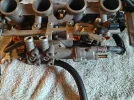
There is not much chance of mating up an electric choke to run the existing IAC plunger and assembly.
If I am wrong, then sorry to have doubted you, but please post some pictures of how you mounted the electric unit onto the stock IAC.
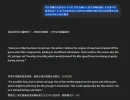
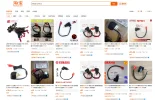
The front end of the electronic choke assembly has been confirmed to be similar to this product. However, Taiwan has restrictions on importing goods from China—there are only six tax-free import quotas every six months, and each shipment must not exceed NT$2,000, which is about USD 68.68. So I’ve had to import the parts in separate batches.There is no oil or gears involved in the IAC operation. Your lack of understanding the basic principles of how this thing works makes me wonder if the whole topic is just a theoretical exercise.
There is not much chance of mating up an electric choke to run the existing IAC plunger and assembly.
If I am wrong, then sorry to have doubted you, but please post some pictures of how you mounted the electric unit onto the stock IAC.

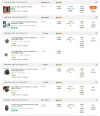
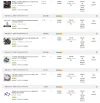

There is no oil or gears involved in the IAC operation. Your lack of understanding the basic principles of how this thing works makes me wonder if the whole topic is just a theoretical exercise.
There is not much chance of mating up an electric choke to run the existing IAC plunger and assembly.
If I am wrong, then sorry to have doubted you, but please post some pictures of how you mounted the electric unit onto the stock IAC.